Laser cutting offers high precision, fast processing, minimal material wastage, and excellent repeatability. However, it can involve a higher initial investment and may have limitations with certain materials. Compared with plasma cutting and waterjet cutting, the best option depends on material type, thickness, cutting accuracy, production volume, and budget.
In modern manufacturing and fabrication, precision, speed, and efficiency are essential for producing high-quality components. Laser cutting has become a popular solution because it can deliver accurate cuts, support detailed designs, and reduce material wastage.
A suitable laser cutting machine can be used for various industrial applications, particularly when consistent and precise results are required. However, laser technology is not the only option available. Factors such as material type, thickness, production volume, and budget can influence the choice of cutting method.
In this article, we compare laser cutting vs plasma cutting and laser cutting vs waterjet cutting, while exploring the advantages, limitations, and applications of a metal laser cutting machine.
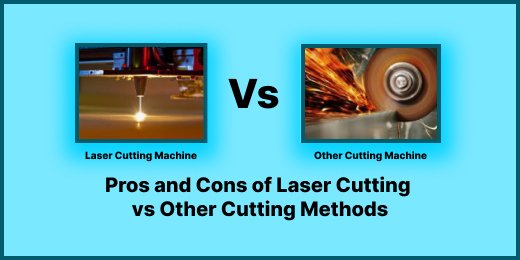
Laser Cutting vs Other Cutting Methods
| Cutting Method | Precision | Speed | Best For | Main Limitation |
|---|---|---|---|---|
| Laser Cutting | High | High | Sheet metal & detailed designs | Higher initial investment |
| Plasma Cutting | Moderate | High | Thick metals | Wider kerf |
| Waterjet Cutting | High | Moderate | Heat-sensitive materials | Higher operating cost |
| CNC Router | High | Moderate | Wood, acrylic, plastics | Material limitations |
Pros and Cons of Laser Cutting vs. Other Cutting Methods
Laser Cutting
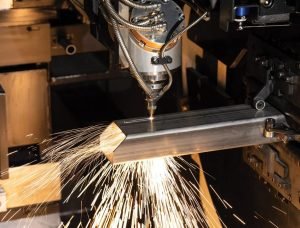
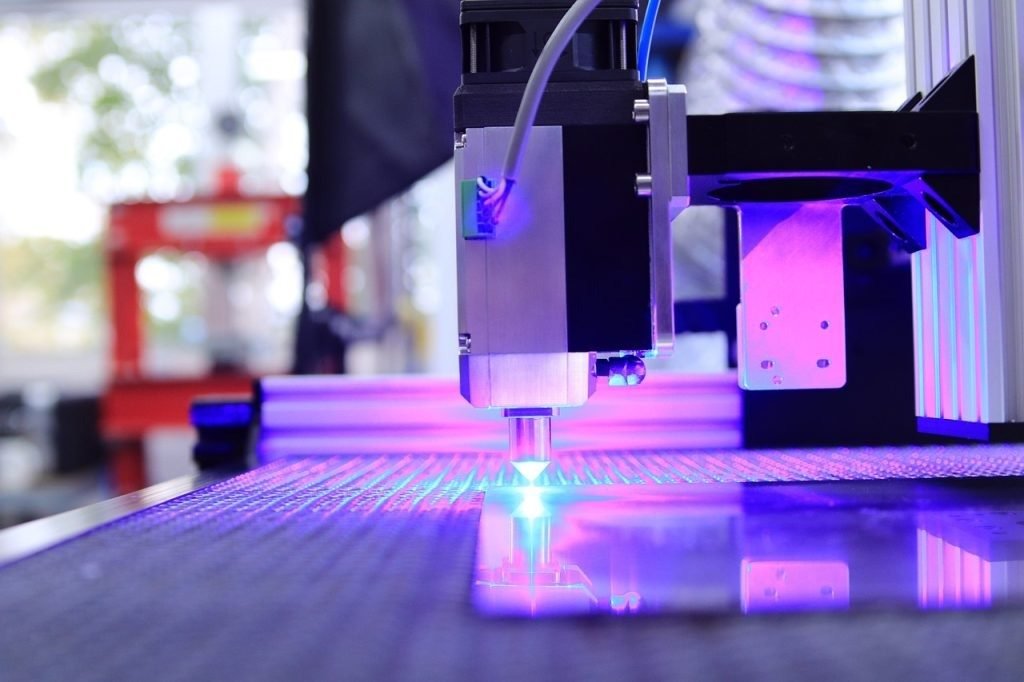
Laser cutting is a technology that employs a highly focused laser beam to cut through materials with great precision. This method has gained immense popularity due to its versatility and ability to work with a wide range of materials. Here are some of the pros and cons of laser cutting:
Pros:
Precision: Laser cutting offers exceptional precision, allowing for intricate and complex designs with tight tolerances. It can achieve cuts as small as a few thousandths of an inch, resulting in high-quality finished products.
Versatility: Laser cutting can be used on various materials, including metals, plastics, wood, fabric, and glass. It is suitable for both thin and thick materials, offering manufacturers a wide range of possibilities.
Speed: Laser cutting is a fast process, enabling high production rates. The laser beam moves quickly and can make precise cuts in a matter of seconds, significantly reducing production time.
Minimal material wastage: Laser cutting minimizes material wastage due to its narrow kerf width. The focused laser beam cuts with precision, reducing the amount of scrap material, which translates to cost savings.
No tooling required: Unlike other cutting methods, laser cutting does not require physical contact with the material, eliminating the need for complex tooling setups. This advantage makes it suitable for rapid prototyping and quick production changes.
Cons:
Initial investment: The equipment and technology required for laser cutting can be costly, making it a significant investment for businesses. However, the long-term benefits often outweigh the initial expense.
Material limitations: While laser cutting is highly versatile, certain materials, such as reflective metals and some plastics, can be challenging to cut due to their high reflectivity or heat absorption properties. Additional precautions or alternative cutting methods may be necessary.
Laser Cutting Applications:
Laser cutting finds applications in various industries due to its precision and versatility. Let’s explore some of the areas where laser cutting excels:
Laser Cutting Applications: Laser cutting is extensively used in the automotive industry for fabricating intricate parts, including body panels, chassis components, and interior trim. The precision and speed of laser cutting enable efficient production and assembly of automotive parts.
Aerospace Industry: Laser cutting plays a crucial role in the aerospace sector, where precision and quality are of utmost importance. It is used to cut complex shapes in materials like aluminum, titanium, and composite materials, contributing to the construction of lightweight and high-performance aircraft components.
Electronics Industry: Laser cutting is utilized in the electronics industry for precise cutting of circuit boards, connectors, and other electronic components. Its ability to create fine details and small features ensures the accuracy and functionality of electronic devices.
Jewelry Design and Manufacturing: Laser cutting has revolutionized the jewelry industry by enabling intricate and precise cutting of precious metals and gemstones. It allows jewelers to create intricate designs, personalized engravings, and unique shapes with ease.
Other Cutting Methods
In addition to laser cutting, there are several other traditional cutting methods commonly used in industries. Let’s explore their pros and cons in comparison to laser cutting:
Plasma Cutting:
Plasma cutting involves the use of a high-velocity jet of ionized gas to melt and sever metals. Here are the pros and cons:
Pros:
Suitable for thick materials: Plasma cutting excels in cutting thick materials, especially metals, making it ideal for heavy fabrication industries.
High cutting speeds: Plasma cutting is faster than many other cutting methods, making it efficient for large-scale projects.
Lower initial investment: Plasma cutting equipment is relatively less expensive compared to laser cutting machines, making it more accessible to small and medium-sized businesses.
Cons:
Reduced precision: Plasma cutting produces wider kerf widths and can result in a rougher finish, limiting its suitability for intricate and detailed designs.
Limited material versatility: Plasma cutting is primarily used for metals and may not be suitable for cutting other materials, such as plastics or wood.
Waterjet Cutting: Waterjet cutting utilizes a high-pressure stream of water mixed with an abrasive substance to cut through materials. Let’s explore its pros and cons:
Pros:
Material versatility: Waterjet cutting can work with a wide range of materials, including metals, plastics, composites, glass, stone, and more.
High precision: Waterjet cutting offers excellent precision, similar to laser cutting, making it suitable for intricate designs and fine detailing.
No heat-affected zone: Unlike laser cutting, waterjet cutting does not generate heat during the process, minimizing the risk of materia
Cons:
Slower cutting speeds: Waterjet cutting is generally slower compared to laser cutting, which can impact production rates.
Maintenance and operational costs: Waterjet machines require regular maintenance and the cost of abrasive materials, adding to the overall operational expenses.
Conclusion
Laser cutting has become an important solution in modern manufacturing because of its precision, speed, versatility, and efficient material utilization. While a laser cutting machine is ideal for accurate and detailed cutting, methods such as plasma cutting, waterjet cutting, and CNC routing can be suitable for different materials and applications. The right cutting technology ultimately depends on material type, thickness, design complexity, production volume, and budget.
For businesses looking for advanced manufacturing solutions, Aaradhanatech offers a range of machines, including F Fiber Laser Cutting Machine, Fiber Welding Machine, Fiber Marking Machine, Wood CNC Router, CNC Wood Router Double Head, Wood Router With Rotary, and Double Head Stone Router Cutting Machine. These solutions can support different cutting, marking, routing, welding, and stone-processing requirements.
If you are planning to upgrade your production setup, explore Aaradhanatech’s laser cutting and CNC machine solutions and contact the team to find the right machine for your specific manufacturing needs.
FAQ’s
Laser cutting is a manufacturing process that uses a focused laser beam to cut or engrave materials with high precision. It is commonly used for metal fabrication, industrial components, detailed designs, and various manufacturing applications.
The main advantages of laser cutting include high precision, fast cutting speeds, minimal material wastage, consistent results, and the ability to produce complex designs without traditional physical cutting tools.
The main disadvantages include higher initial equipment costs and limitations when processing certain reflective or difficult-to-cut materials. Machine maintenance and operating requirements should also be considered.
Laser cutting vs plasma cutting depends on the application. Laser cutting is generally preferred for high precision, detailed designs, and cleaner cuts, while plasma cutting can be suitable for thicker metal applications and heavy fabrication work.
Laser cutting vs waterjet cutting mainly differs in cutting technology and heat generation. Laser cutting uses a focused laser beam, while waterjet cutting uses high-pressure water, often with abrasives. Waterjet cutting can be useful for heat-sensitive materials, while laser cutting is often preferred for fast and precise cutting.
A laser cutting machine can process various materials depending on its configuration, including different metals and sheet materials. The suitable machine and laser power depend on the material type and thickness.
A metal laser cutting machine is used to cut and process metal sheets and components for applications such as automotive parts, fabrication, electrical panels, machinery, and industrial manufacturing.
Yes. Laser cutting can be suitable for high-volume production because of its speed, repeatability, and ability to produce consistent cuts. The appropriate machine specifications should be selected according to production requirements.
Consider factors such as material type, material thickness, required cutting speed, accuracy, production volume, machine power, automation features, maintenance requirements, and after-sales support before selecting a laser cutting machine.
When choosing a laser cutting machine manufacturer, compare machine specifications, product quality, technical support, warranty, service availability, industry experience, and the manufacturer’s ability to provide a machine suited to your production requirements.